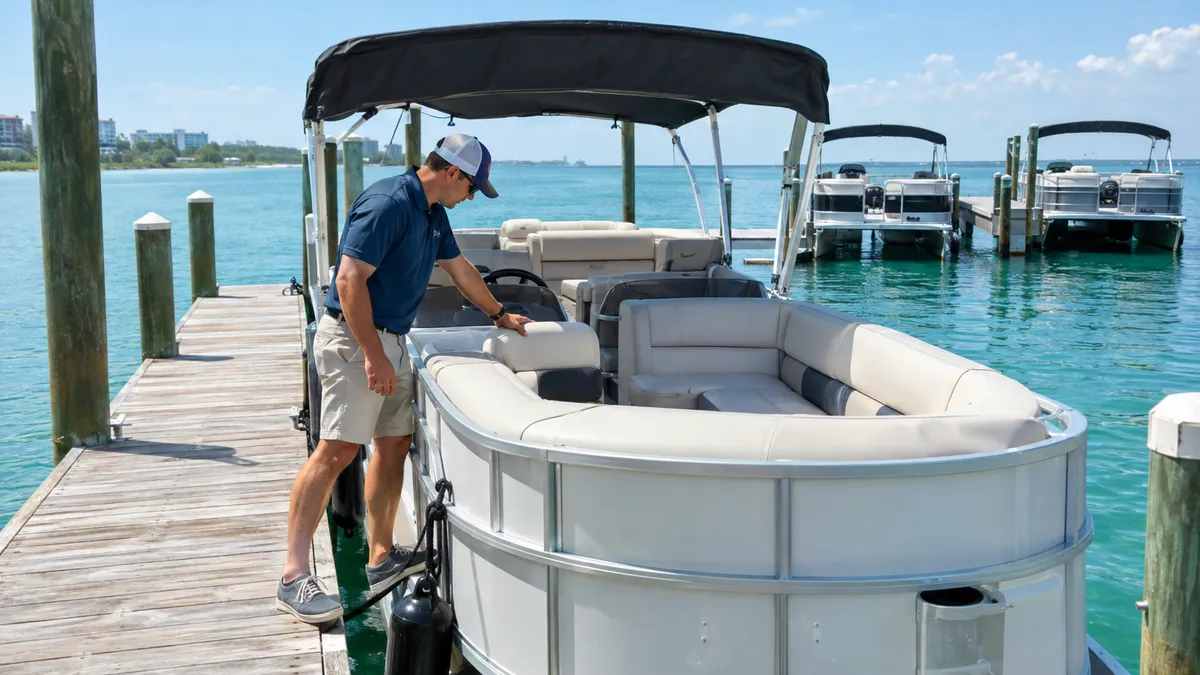
Add-Ons That Actually Sell: How Boat and Watersports Rental Operators Earn More Per Booking
A customer books a half-day pontoon rental. They pay the deposit, get the confirmation email, and show up at the dock Saturday morning. At no point did anyone ask if they wanted tubes, a cooler packed with ice, or a wake board tow session. They rented what they saw. You earned what they clicked.
That gap between what a customer paid and what they would have happily paid is the add-on opportunity. It is not about pressure or upselling in the uncomfortable sense. It is about putting the right extras in front of someone at exactly the moment they are already spending money — which is during checkout, not after.
Why the timing of the offer matters more than the offer itself
Most rental operators who do sell add-ons offer them at the dock, right before the customer leaves. The problem is that the customer's mental wallet is already closed. They made the purchase decision days ago. The deposit cleared, the confirmation email arrived, and psychologically they are already done buying.
Ask for an add-on at the counter and you get a pause, a glance at a partner, and usually a polite no. Ask during the checkout flow — when someone is already in the decision-making mindset, card in hand, actively choosing things — and the conversion rate looks completely different.
This is not a theory. It is the same reason airlines sell seat upgrades at booking and restaurants run specials before the table sits down. The window when a customer is most open to spending more is short, and it closes the moment they complete the transaction.
What actually sells as a rental add-on
Not every extra is worth listing. The ones that move are specific, useful, and either solve a problem the customer already has or enhance the experience they are already imagining.
For pontoon and boat rentals, the add-ons that tend to convert are:
- Towable tubes and tow ropes — families with kids will nearly always add this once they see it in checkout
- Fuel packages — customers hate worrying about gas. Pre-paid fuel removes the anxiety and keeps returns clean
- Cooler rental with ice — easy yes, especially for full-day bookings in summer
- Extended return windows — a one-hour buffer at the end of the day sells when the price is reasonable
- Wakeboards and water skis — for fleets on calm lakes or protected bays
- Bluetooth speaker rental — low cost, low friction, high attach rate
For jet ski, paddleboard, and watersports rentals, the list shifts:
- Life vest upgrades — especially for families with young children who want something beyond the basic vest
- Wetsuit rental — important in spring or fall when the water is cooler than guests expect
- Guided trips or instruction add-ons — a 20-minute lesson before a paddleboard rental reduces returns from guests who give up
- Waterproof phone cases or dry bags — inexpensive, high perceived value, nearly zero overhead
- Tow sessions — if your operation includes a vessel, selling a towed ride behind a jet ski or boat converts well for groups
The pattern across both categories is the same: the best add-ons either make the core rental better or remove a friction point the customer was quietly worried about.
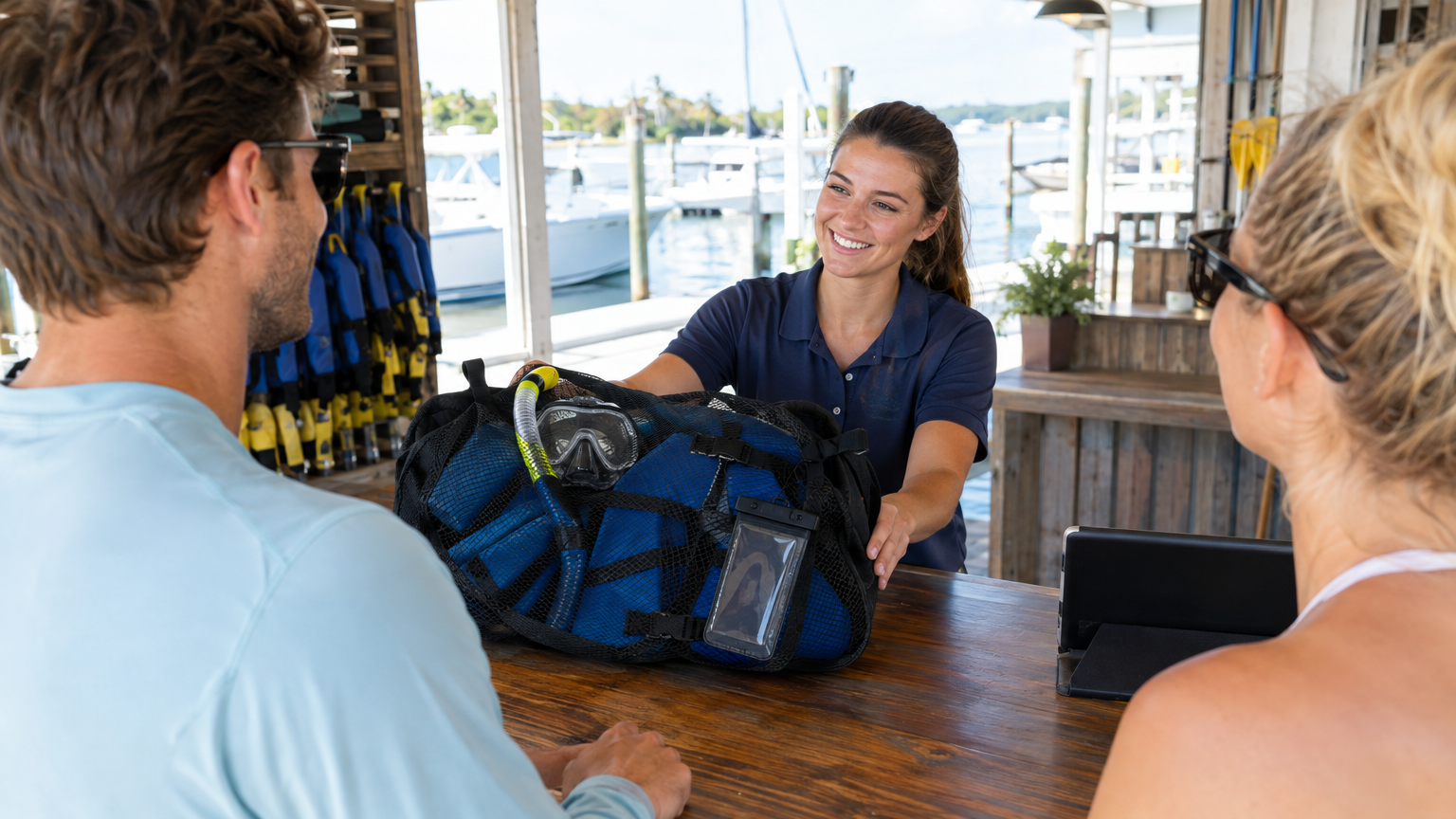
Add-ons handed off at the counter convert less reliably than add-ons offered during the online checkout flow.
How to structure add-ons so they convert
A long list of extras with no context is just noise. Customers skip it or get overwhelmed and choose nothing. The structure of how add-ons appear during checkout matters as much as what you offer.
A few things that actually help:
Group add-ons by outcome, not by category. Instead of listing 12 items alphabetically, organize them around what the customer is trying to do. A section titled "Make it a full-day experience" lands better than a plain checklist. People buy outcomes.
Keep pricing in plain view. Hidden or ambiguous pricing kills add-on conversions. Show the add-on price clearly next to the item, and ideally show the updated booking total updating as items are selected. Transparency reduces second-guessing.
Limit the selection. Three to five well-chosen add-ons outperform twelve mediocre ones. If a customer has to scroll a long list, they will scroll past everything.
Use real descriptions, not SKU names. "Tube tow package — fits up to 3 riders, rope included" tells a story. "Water tube rental" does not.
Sequence them right. Add-ons should appear after the core booking details are confirmed but before the payment step. At that point the customer is committed to the experience and still in a spending frame of mind.
The inventory problem most operators underestimate
Offering add-ons at checkout only works if you can actually fulfill them. The operational risk of selling five tube packages on a Saturday when you only own three tubes is real. Add-on inventory needs to be treated like rental inventory — tracked, capped, and tied to real unit counts so you cannot oversell what you do not have.
This is where a lot of manual or spreadsheet-based setups fall apart. The operator builds a great list of add-ons, offers them to customers, and then spends Saturday morning substituting, refunding, or apologizing. That experience is worse than not offering the add-on at all.
When add-on inventory is capped inside the booking system — tied to real unit counts per time slot — the problem disappears. The checkout flow stops selling the item when stock runs out, and you never have to deliver that conversation at the dock.
What operators consistently get wrong
The two most common mistakes are offering add-ons at the wrong time and pricing them without thinking about perceived value.
On timing: add-ons offered after a booking is confirmed, typically in a follow-up email asking customers to "upgrade their experience," convert at a fraction of the rate of add-ons offered during the original checkout. The customer already made their decision. You are asking them to open their wallet a second time. Some will, most will not.
On pricing: add-ons priced too close to a separate rental feel like a rip-off. A tube tow set that rents for $80 as a standalone should be priced at something like $45 as an add-on to a $400 pontoon rental, where it represents a small increment on an already large purchase. The same $80 add-on on a $90 rental feels expensive relative to the base. Price add-ons relative to the booking they are attached to, not relative to their standalone rate.
How this plays into the season you are heading into
Late fall and early winter are naturally slower for Gulf Coast and coastal rental operations. But the customers who do book during shoulder season tend to be more deliberate — they planned a trip specifically, they often have longer time blocks, and they are more likely to want a complete experience rather than a quick ride.
That customer profile is a better add-on buyer than a peak-summer walk-up who is already hot, already running late, and just wants to get on the water. If you have add-ons structured in your checkout before the season quiets down, you are positioned to earn more from every off-season booking that does come in.
Getting the add-on flow set up during a slow week is also significantly easier than trying to do it during peak season when every available hour goes to operations.
The practical starting point
If you are not currently offering add-ons during checkout, the most useful first step is to write down the three things customers most often ask for at the dock that you already have available. Those three things are your starting list. Build the add-on checkout around them, cap them at your real inventory count, and see what happens to your average booking value over the next thirty days.
You do not need a long list to start. You need the right items at the right moment. Expand from there once you see which ones convert.
VrixPlay's rental checkout — for both boat rentals and watersports operations — includes add-on selling built directly into the booking flow. Tubes, coolers, gear packages, guided trips, and instruction sessions can all be configured with real inventory caps per time slot, so what customers see is always what you can deliver. If you want to see how the checkout is structured, start free and walk through a live setup — no card required.
