How to Stop Overselling Seats on Your Tour Boat Departures
You run a sunset cruise. You have 40 seats, three departures a week, and a handful of ways guests can book: your website, the phone, a walk-up at the dock, maybe a third-party listing. For most of the season, that system works fine. Then it does not. A holiday weekend, two group bookings that came in through different channels, and suddenly 47 people are standing at the gangway for a 40-seat boat.
Overselling a tour boat departure is not usually the result of bad math. It is the result of good-faith booking channels that do not talk to each other. And the fix is not complicated, but it does require closing a few specific gaps that catch operators by surprise.
Why Overselling Happens on Tour Boats
Charter fishing boats and private yacht charters oversell occasionally, but the structural risk is lower because most of those bookings block the whole vessel. One party, one boat, one date.
Tour boats and cruise operations are different. You are selling individual seats across recurring departures, often to multiple people at the same time. Your capacity management problem is not just preventing double-booking. It is enforcing a real headcount limit across every channel simultaneously.
The most common gaps that lead to overselling:
- Walk-ups logged separately from online bookings. If your online calendar does not know about the dock walk-in, those seats get sold twice.
- Phone reservations written on paper or in a separate spreadsheet. Same problem. The calendar does not know.
- Third-party listings that do not update in real time. A guest books through an external site and your own booking page still shows that seat as available until someone manually updates it.
- Group bookings that skip the normal flow. A call comes in, someone manually reserves 12 seats via email, and the online calendar still shows full availability for that departure.
- Staff adding walk-ins without visibility into the current headcount. They see an empty deck and assume there is room, not knowing three more guests are inbound from online reservations.
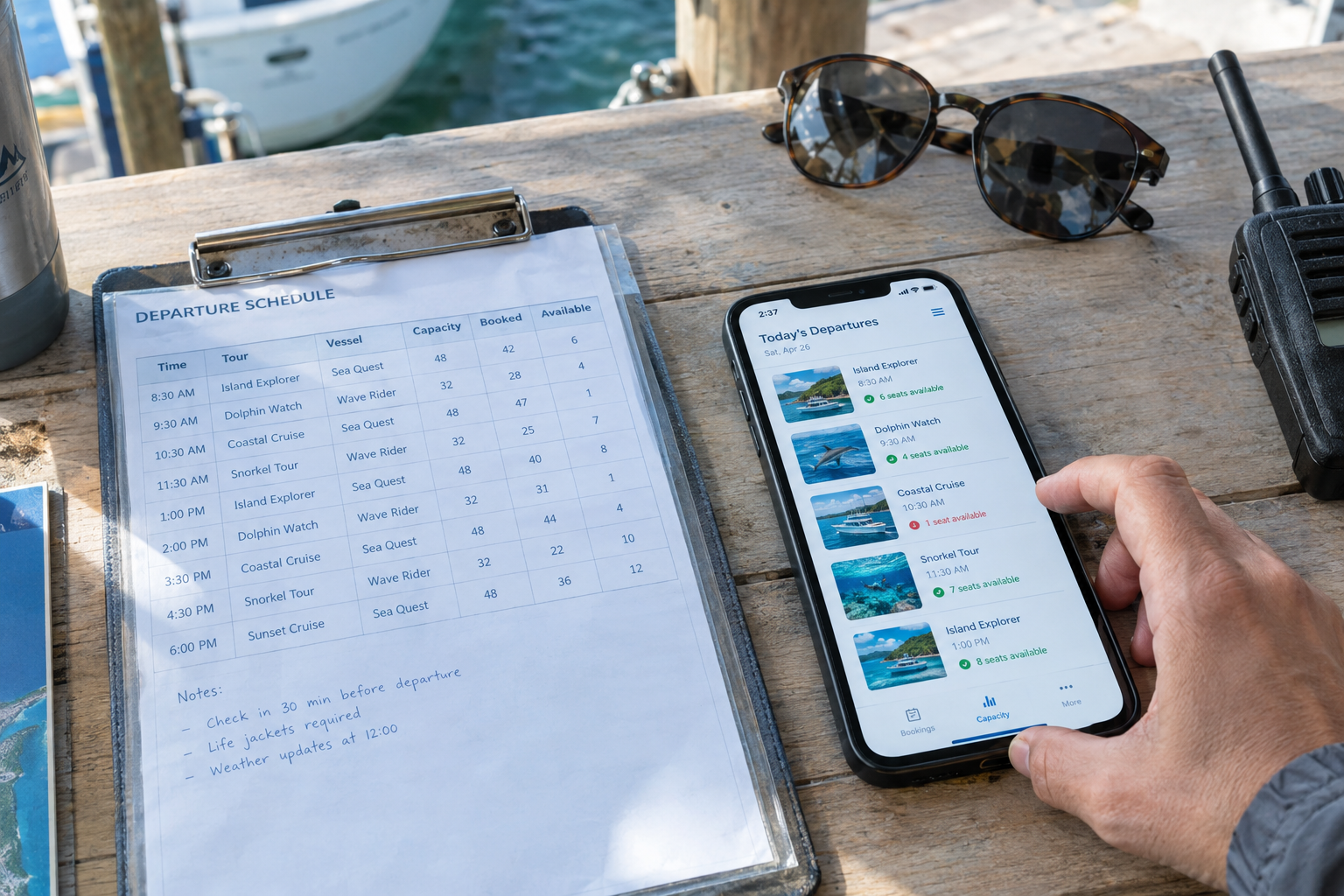
Paper scheduling and digital bookings in separate systems is where most overselling gaps start.
The Damage Goes Beyond the Awkward Moment at the Gangway
Turning away guests who hold valid tickets is embarrassing and expensive, but that is the visible problem. The compounding damage is less obvious.
Guests who get turned away do not quietly accept a refund and go away. They leave reviews. They tell everyone in their vacation rental about it. When the experience is memorable for the wrong reason, the story travels.
You also lose the ability to plan accurately. If your actual headcount differs from your booking records regularly, you are making decisions about fuel, provisions, crew, and pricing on bad numbers. Over a full season, that adds up.
And from a safety standpoint, passenger vessels have real capacity limits. Running over them, even by a few people, is not a gray area.
The Fix: One System That Knows the Real Count
The core problem is always the same: multiple booking sources feeding into a system that does not enforce a single shared headcount. The fix is routing every booking source through one calendar that knows your real capacity and will not let it go over.
Every seat counts against the same inventory
When a guest books online, that seat disappears from the calendar immediately. When a staff member adds a walk-up from their phone, same thing. When you take a group reservation over the phone, the manual entry deducts from the live count. There is no version of sold in two places because there is only one place seats exist to be sold.
Staff can add walk-ins from the dock without guessing
The best-run cruise operations give dock staff a mobile view of each departure's current headcount before they accept a walk-in. If the 5 p.m. departure shows 38 of 40 seats sold, the staff member knows there are exactly two seats left, not probably a couple seats left. That single piece of information prevents more oversells than any policy change.
Recurring departures do not require daily calendar maintenance
A useful system lets you build your weekly departure schedule once, for example Tuesday and Thursday sunset cruises at 5:30 p.m. with capacity 40, and have it publish automatically with real remaining capacity shown on your booking page. You override individual dates for weather, private hires, or closures. The rest runs without you touching it.
QR boarding passes close the final gap
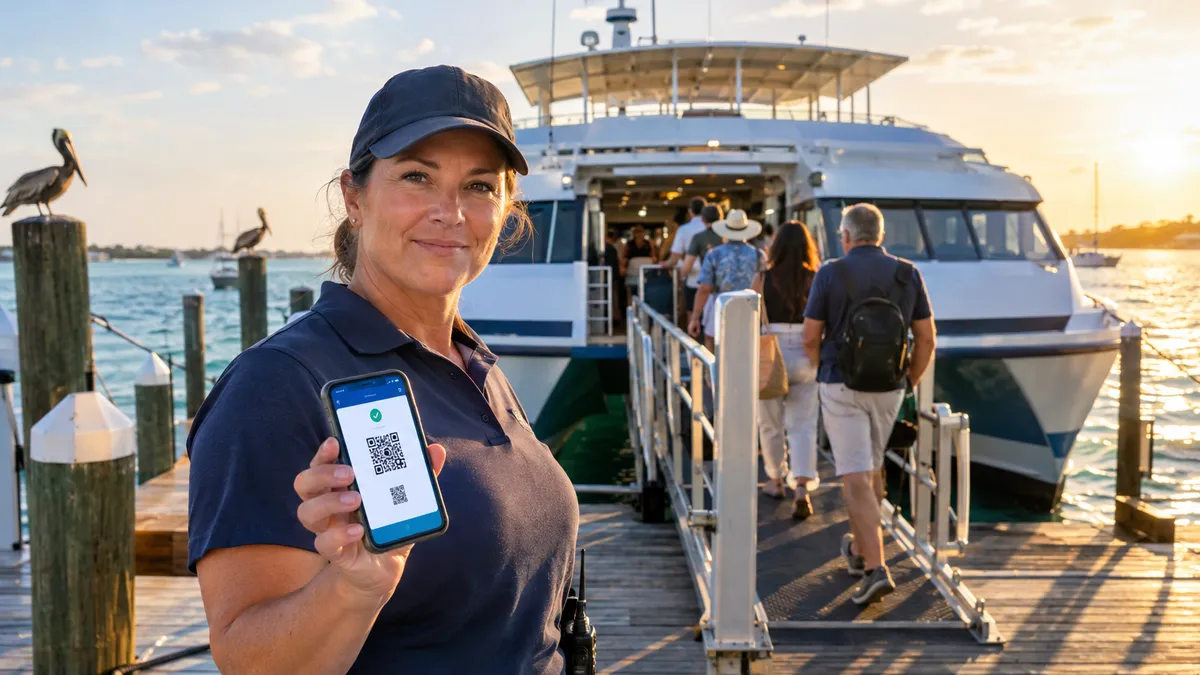
Even with a clean booking system, a paper check-in process at the gangway can still let someone slip through. QR boarding passes that guests receive at booking, scanned from your phone at boarding, create an exact real-time count of who is actually on the boat. If someone is not in the system, the scan does not happen and the count does not move.
What to Do Right Now If You Are Running Multiple Booking Sources
If you are not ready to switch systems today, here is a practical triage list:
- Pick one place to be the master headcount. Even if it is a shared document for now, it should be the only source of truth and every channel should update it before confirming a reservation.
- Remove direct confirmation from phone and email bookings. Route those to a hold that gets entered into your master calendar before the guest gets a confirmation.
- If you use any OTA listings, treat those as blocked inventory. Build a conservative buffer into your online channel and manually manage the overlap.
- Give every dock staff member visibility into departure headcounts. This can be as simple as a shared phone view of your booking calendar. They should never have to guess.
How VrixPlay Handles This for Tour and Cruise Operators
VrixPlay's tour boat tools are built around recurring departures with enforced seat-level capacity. You set how many seats each vessel can carry, and the system will not accept bookings beyond that number: online, manual, or walk-in. Every seat sold through any channel reduces the shared count.
You build your weekly departure schedule once. It publishes with real remaining capacity and keeps selling without you touching the calendar between departures. When you need to cancel a departure for weather, you do it in one action and every ticket holder is notified immediately.
Guests get a QR boarding pass at booking. You scan them at the gangway from your phone, no extra hardware, no printed lists. The manifest closes when boarding is complete and you know the exact headcount before you leave the dock.
VrixPlay runs on a flat 3% per booking with no monthly subscription, so you are not paying for the system on quiet weeks or in the off-season.
The Standard to Aim For
A clean tour boat operation boards its maximum guest count exactly, without turning anyone away and without stress at the gangway. That sounds like a small operational detail, but it is what separates the operations that build a reliable repeat customer base from the ones that spend every busy weekend managing the fallout from booking mistakes.
One calendar. Real capacity. Every channel in sync.
If you run dolphin cruises, sunset sails, snorkel trips, sightseeing tours, or any departure-based experience where guests buy individual seats, see how VrixPlay handles tours and cruises and start free with no card required.
