How Tour Boat Operators Can Run Per-Seat Ticketing Without the Spreadsheet Chaos
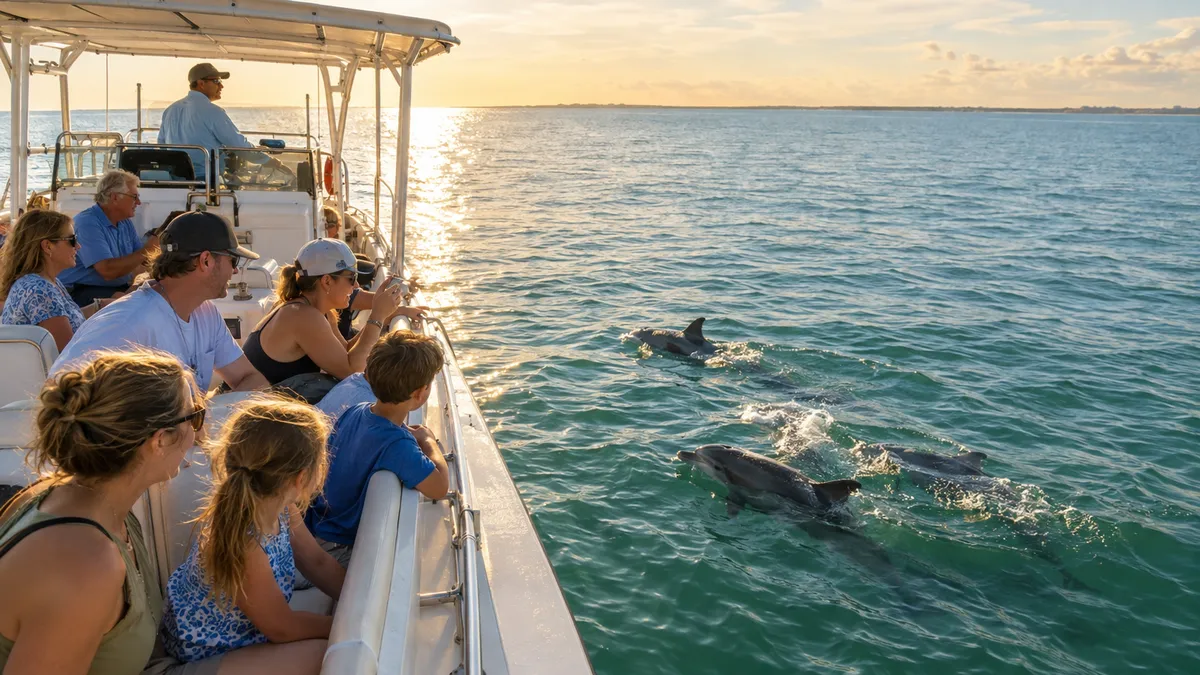
If you operate a dolphin cruise, a sunset sail, a sandbar shuttle, or a snorkel trip, your booking problem looks different from a fishing charter captain's. You're not managing a private party on one boat for one date. You're filling seats across multiple daily or weekly departures, keeping inventory accurate across every channel, collecting waivers before guests walk up in a group, and checking in thirty people at the dock with a line forming behind them.
Most tour boat operators in that situation are running on a combination of phone calls, text messages, a shared Google Sheet, and a lot of tribal knowledge. It works until it doesn't — and it doesn't work the moment you add a second vessel, a second departure time, or a second crew member who also needs to see the manifest.
This is a guide to getting off that spreadsheet without rebuilding your whole operation.
The real operational problem for tour boats
Charter fishing operations book one group per boat per trip. The complexity is in the fleet management: multiple boats, multiple captains, rotating crew, FishingBooker imports bumping against direct bookings.
Tour boats have a different shape of complexity. Your challenge is volume and cadence:
- Multiple departures per day, often seven days a week during season
- Per-seat inventory that can oversell if two staff members take phone bookings at the same time
- Guests who book weeks in advance and expect a confirmation email and a reminder
- Walk-ups who pay at the dock and need to be counted against the same capacity
- Waivers for every passenger — not just one group leader
- A two-minute check-in window when the boat is ready and guests are scattered across the marina
When that's running through a spreadsheet and a personal cell phone, every busy Saturday is a small emergency waiting to happen.

Checking the morning manifest at the dock — one phone, every seat, no clipboard required.
What a working per-seat ticketing setup looks like
The mechanics aren't complicated once they're in one place. Here's how a well-configured tour boat operation runs:
Inventory tied to actual capacity
Each departure has a seat count that reflects the boat's real capacity. When a seat sells online, it's gone from the public calendar. When a walk-up is logged at the dock, that count updates too. Nobody oversells a departure because nobody is counting in their head.
Recurring departure schedules
If you run a 10 a.m. dolphin cruise and a 2 p.m. sunset sail every day from Memorial Day through Labor Day, that schedule should be built once and run automatically — not recreated trip by trip. Exceptions (a holiday closure, a maintenance day, a weather block) get added when you need them, not managed manually from the start.
Waivers signed before guests arrive
Collecting waivers at the dock is a bottleneck. One family of five, each requiring a signature, holds up the line for everyone behind them. When a waiver link goes out in the booking confirmation email and guests sign from their phones the night before, the dock is just a scan-and-board moment. For minors, a parent's signature covers the whole family and attaches to every seat in the booking.
QR check-in from a phone
Every guest gets a QR code at booking. Your crew scans it at the dock from their own phone — no hardware, no clipboard, no radio to the office. Guests who are already checked in show as checked in. Walk-ups get logged manually against the departure so the count stays accurate.
Add-ons that sell in checkout
Snorkel gear rental, an underwater camera, a guided snorkel instruction upgrade, a parking pass — these shouldn't require a separate conversation. If they're configured as add-ons in the booking flow, guests buy them when they book the seat, and the crew knows at departure who has what.
Why this matters more in the off-season than you think
October through February is when Gulf Coast tour operators slow down. It's also when they have the time and the mental space to actually fix the systems they were too busy to touch during summer.
Getting your departure schedule built, your per-seat inventory configured, and your waiver workflow set up before the spring spike means your 2027 season starts clean. You won't be manually counting seats in a spreadsheet during your busiest weeks. Your crew won't be texting you from the dock to ask whether the 2 p.m. is full.
The operators who consistently outperform their peers on repeat bookings and reviews aren't necessarily running better trips. They're running cleaner logistics, which means guests have a better experience from the moment they book to the moment they step off the boat.
The specific setup steps for a tour boat operation
If you're moving a tour boat operation from spreadsheets to a real booking system, here's the order of operations that tends to go smoothest:
- Define your vessels and their capacities. Each boat is its own entity with its own seat count, crew, and trip types. Start here before you touch the schedule.
- Build your trip types. A dolphin cruise, a sunset sail, and a snorkel trip are different products with different durations, prices, and guest instructions. Set them up individually so each has its own booking page and confirmation flow.
- Set your recurring departure schedule. Build a weekly template that matches your season. Add date-specific overrides only where you need them.
- Configure waivers. One waiver template tied to every booking across all your trip types. Parents sign for minors. Waiver status is visible on the manifest before you depart.
- Add your crew. Crew members see only the departures they're assigned to. They can check guests in from their own phone without access to your admin settings or payment records.
- Set up add-ons. Any gear, instruction, or upgrade that guests can buy at the time of booking. Keep this list short to start — you can always add more.
- Embed or link the booking page. Drop it on your website or send the link directly. Test a booking end-to-end before you open it to guests.
Done carefully, that setup takes a few hours — not days. And it's a one-time investment that pays out across every departure for the rest of the season.
One thing most operators get wrong with per-seat ticketing
The most common mistake is treating walk-ups as outside the system. When a couple shows up at the dock ten minutes before departure and pays cash, that payment gets pocketed and the departure record shows two empty seats that were actually filled. Your end-of-season revenue numbers are wrong. Your capacity data is wrong. Your occupancy averages are wrong.
The fix is simple: log walk-ups as manual bookings against the departure before the boat leaves. It takes thirty seconds and keeps everything accurate. Cash collected at the dock gets recorded against the booking, not just put in a pocket.
What to look for in tour boat booking software
There's no shortage of booking tools. Most of them were designed for something adjacent to your operation — vacation rentals, activity tours, general ticketing — and they'll require you to adapt your workflow to fit their model. The things worth checking before you commit to any platform:
- Per-seat inventory control. The system should refuse to oversell a departure automatically, not just warn you after the fact.
- Recurring departure scheduling with exceptions. You should be able to build a weekly template and override individual dates without rebuilding the whole schedule.
- Mobile check-in that works at the dock. No dedicated hardware. No laptop. Your crew's phone is the scanner.
- Waivers tied to departures, not just accounts. You need to see waiver status per guest per departure, not a general flag on the customer record.
- Direct payments. Money should go into your account, not held by the platform and released on a weekly or monthly cycle. Cash flow matters more on thin-margin tour operations than it does for high-ticket charters.
- Honest pricing. A monthly subscription on top of a per-booking commission can quietly cost more than a flat percentage model, especially in shoulder season when revenue drops but the subscription bill doesn't.
The bottom line
Tour boat operations aren't fishing charters. The booking challenges are different, the check-in cadence is different, and the margin for error at the dock is much tighter when you have thirty guests boarding in ten minutes instead of one private group boarding at their own pace.
Getting per-seat ticketing, recurring departures, digital waivers, and QR check-in running on one system before your next season starts isn't a luxury. It's the baseline that lets you actually focus on the experience rather than the logistics.
VrixPlay runs tour boat operations with per-seat ticketing, recurring departure schedules, dockside QR check-in, and digital waivers — all on a mobile-first platform that installs to your phone in about thirty seconds. The software is free; you pay a flat 3% only on completed bookings. The setup is handled by the team in Destin, so you're not configuring anything from scratch.
If you run dolphin cruises, sunset sails, sandbar shuttles, snorkel trips, or any experience that sells individual seats on recurring departures, take a look at how it works for tour boats — or call the team at (850) 985-2631 to talk through your specific operation.
